
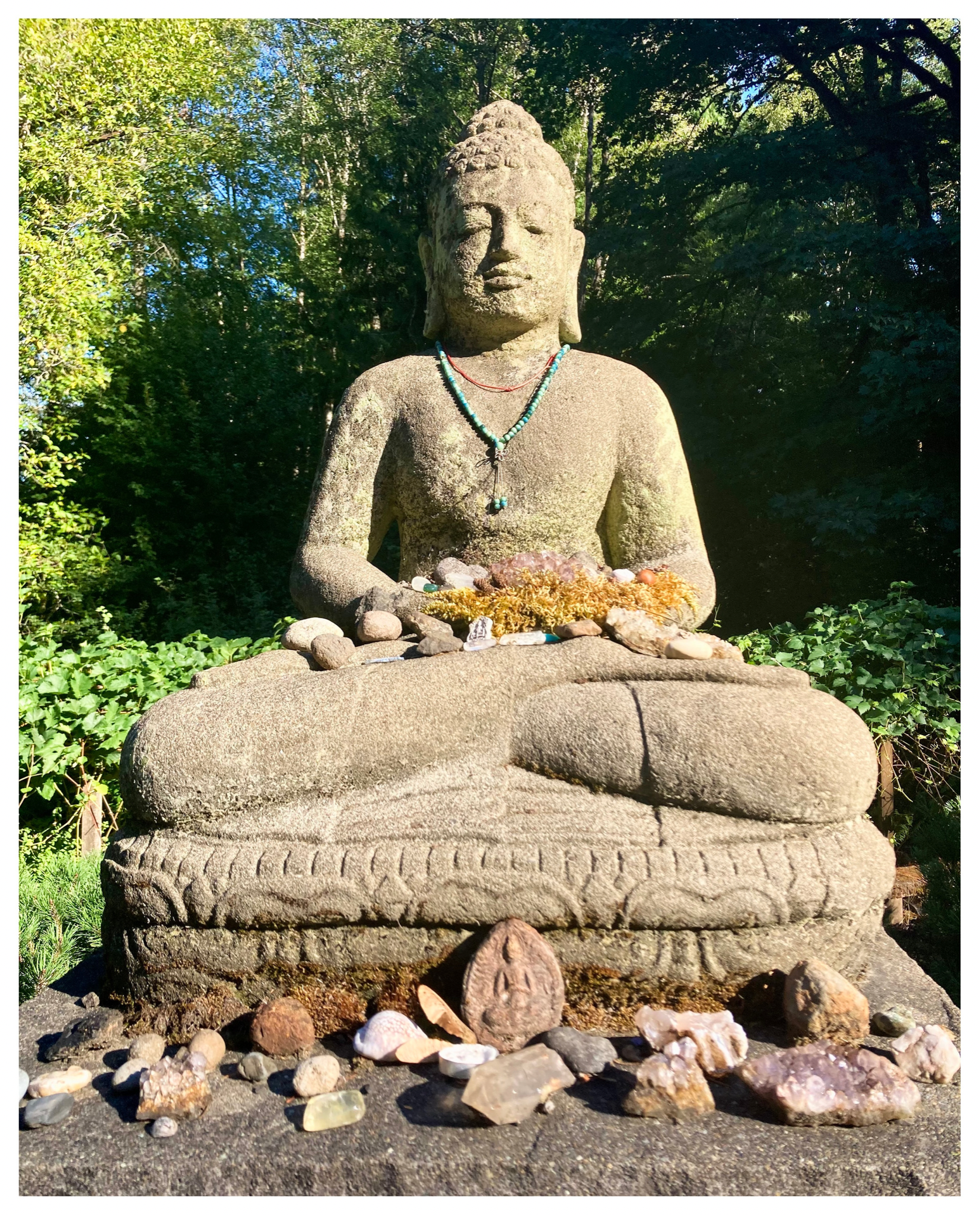
A different way of relating to your inner experience
Mindfulness and Buddhist-informed psychology help cultivate awareness, compassion, and a steadier relationship with thoughts and emotions.
Mindfulness and Buddhist-informed psychology offer a perspective on emotional suffering that emphasizes awareness rather than avoidance. Rather than trying to eliminate difficult thoughts or feelings, this approach invites us to notice them with curiosity and compassion. Over time, this shift in relationship can reduce the struggle that often accompanies anxiety, self-criticism, and emotional distress.
In therapy, mindfulness becomes less about formal meditation and more about developing the ability to observe your inner world with greater clarity. By learning to slow down and notice thoughts, emotions, and reactions as they arise, many clients begin to experience more space between themselves and the patterns that once felt automatic or overwhelming.
Understanding Mindfulness in Practice
In my work, mindfulness and Buddhist-informed psychology offer a foundation for developing awareness and self-compassion. Together, we explore how thoughts, emotions, and physical sensations move through your experience, often bringing attention to patterns that may have been operating automatically for years.
This approach is not about forcing calm or achieving a particular mental state. Instead, it invites a gentler form of attention, one that allows difficult emotions, anxiety, or inner conflict to be understood rather than pushed away. Over time, many clients begin to feel less controlled by their thoughts and more capable of responding to life with intention rather than reactivity.
Mindfulness and Buddhist-Informed Therapy Can Be Especially Helpful If You Notice Experiences Like:
- Feeling caught in repetitive thought patterns or overthinking
- A harsh inner critic or constant self-judgment
- Difficulty staying present without becoming overwhelmed by emotions
- Anxiety that feels driven by fear of the future or regret about the past
- Feeling disconnected from yourself or your inner experience
- A desire to develop more self-compassion and emotional balance
- Difficulty slowing down or stepping out of constant mental activity
- Wanting a different relationship with thoughts and emotions
Additional Trainings and Certificates
- I have completed my Buddhist Psychology Training: Scientific Intersections and Clinical Applications of Dharma with Matthew Brensilver, PhD from Spirit Rock, an insight meditation center.
- I have completed a 10-week Mindful & Self-Compassion Course from the Center for Mindfulness Self-Compassion

Mindfulness Educational Resources
Mindfulness and Buddhist psychology offer many insights into the nature of the mind, suffering, and emotional resilience. If you are interested in learning more about mindfulness practices and contemplative psychology, the resources below provide thoughtful introductions to these perspectives.
Schedule a Free Consultation
A complimentary 15 minute consultation is available for those who would like to explore whether working together feels like a good fit. This conversation offers space to ask questions, share a bit about what brings you to therapy, and get a sense of my approach before making a financial or therapeutic commitment.
The consultation is not an evaluation or obligation. It is simply an opportunity to determine whether the structure, pacing, and focus of this work align with what you are looking for, and if we are a good fit for each other.